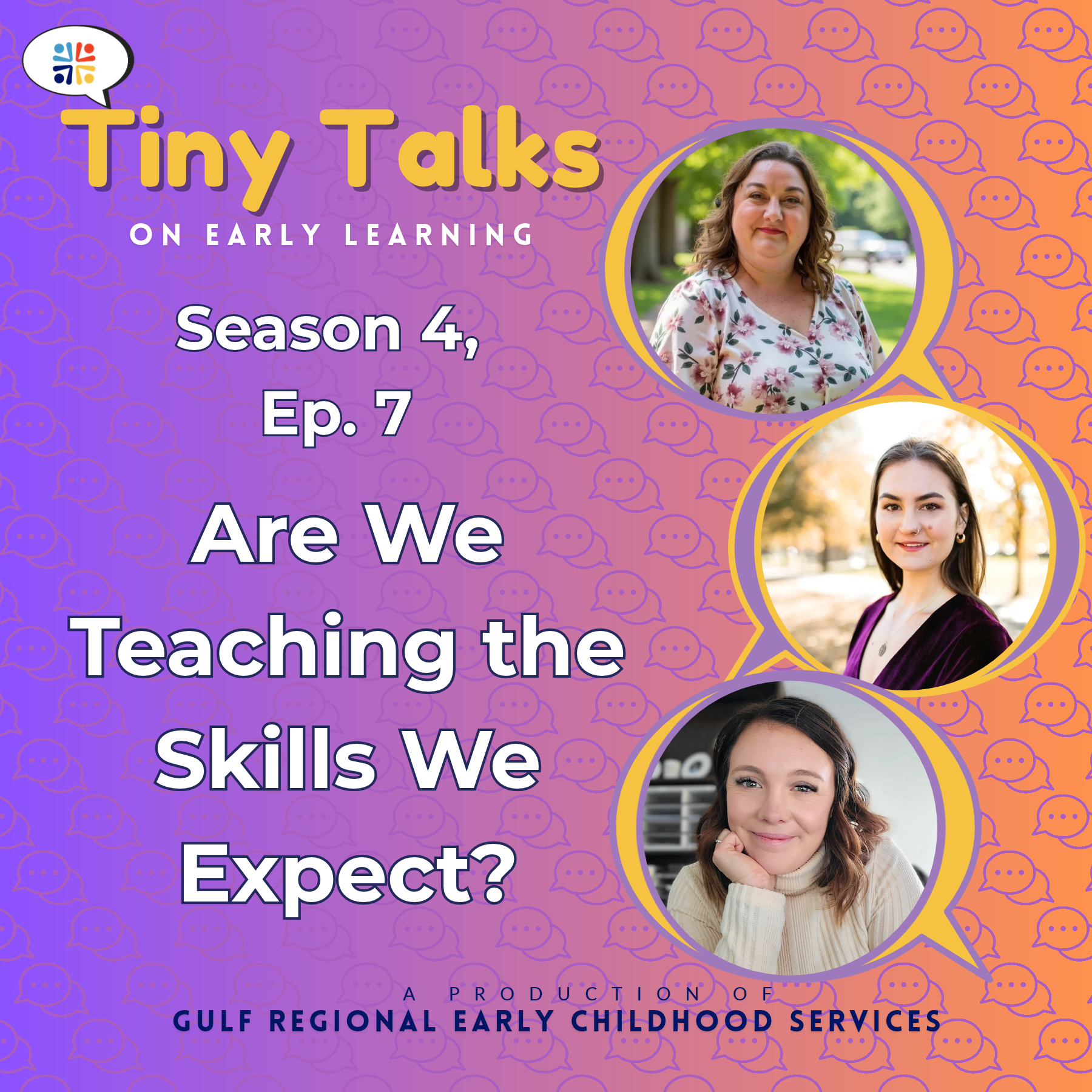
Are We Teaching the Skills We Expect?
Season 4, Episode 7
Download the episode transcript here.
Episode Description
“Use your words.” “Wait your turn.” “Clean up.” “Calm down.”
We say these things to young children every day, but have we stopped to consider just how many skills are involved in meeting those expectations?
In this episode of Tiny Talks on Early Learning, Jessica and Venay welcome back Steffani Hammitt for a conversation about the difference between telling children what to do and actually teaching them how. Together, they unpack the executive function and social-emotional skills behind everyday classroom expectations, explore how play naturally supports skill development, and discuss why individualized support matters—especially for neurodivergent children.
From navigating transitions and frustration to rethinking school readiness, this conversation challenges educators to replace repeated correction with curiosity, intentional teaching, and developmentally appropriate support.
Key Takeaways
Telling isn't the same as teaching. Instructions like “use your words” or “make good choices” aren't enough if children haven't learned the specific skills needed to follow them.
Simple expectations require complex skills. Cleaning up, waiting, sharing, and handling disappointment involve executive function, emotional regulation, flexibility, and frustration tolerance. Breaking tasks into smaller steps makes them more manageable.
Play is powerful practice. Movement games, pretend play, building activities, and everyday interactions give children natural opportunities to strengthen impulse control, working memory, problem-solving, and social skills.
Individualized support isn't lowering expectations. Visual schedules, movement breaks, sensory accommodations, and other adjustments can help neurodivergent children access learning and demonstrate their abilities.
Curiosity changes our response to behavior. When repeated reminders aren't working, consider what the child's behavior might be communicating and what skill or support may be missing.
This Week's Challenge: Teach It, Don't Just Expect It!
Choose one instruction you find yourself repeating in your classroom—“clean up,” “wait your turn,” or “use your words,” for example.
This week, try something different:
Identify the specific skills involved in meeting that expectation.
Break the task into smaller, manageable steps.
Model or practice the skill with children during a calm moment.
Notice what changes when you teach rather than simply remind.
Remember: If telling them seventeen times hasn't worked, maybe it's time to try showing them a different way!