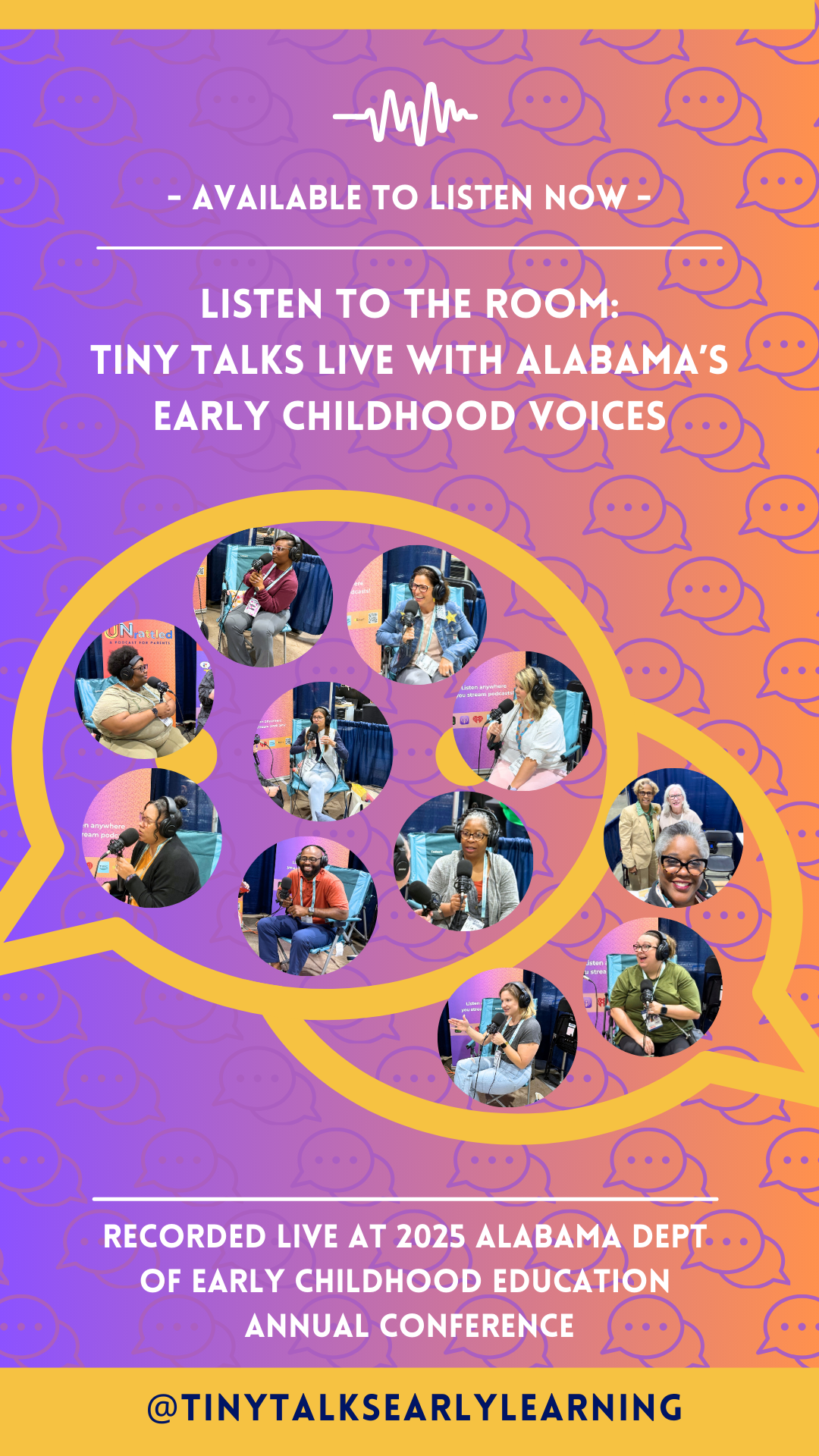
Recorded live at the 2025 Alabama Department of Early Childhood Education Conference in Birmingham, this special edition of Tiny Talks on Early Learning brings you straight into the heart of Alabama’s early learning community. Across three days, over 4,000 educators, directors, owners, specialists, coaches, and leaders stopped by the “Chat & Chill” booth to pull three question cards and share real, unscripted reflections from their daily work with young children.
In this episode, you’ll hear short conversations stitched together into a powerful chorus of voices—from first-year teachers and seasoned directors to mental health consultants and statewide support organizations. They talk candidly about burnout and well-being, big feelings and behavior, the power of play and connection, family partnerships, quality improvement, and the legacy they hope to leave with the children and families they serve. It’s a love letter to Alabama’s early learning workforce and a reminder that the true strength of this field is—and always will be—its people.
Key Takeaways for Listeners:
Well-being and burnout are real—and require intentional care.
Educators name the emotional load of the work and the risk of burnout, while sharing personal strategies like early-morning routines, movement, and boundaries that help them keep showing up with energy and love for children.Connection comes before curriculum.
Over and over, guests emphasize that strong relationships and daily rituals—greetings, check-ins, “I love you” rituals, Baby Doll Circle Time, playful eye contact and touch—are the foundation for learning, behavior, and emotional safety.Play, creativity, and technology make learning irresistible.
From Legos on a desert island to Alexa-led dance parties, pretend McDonald’s in dramatic play, and tools like Frog Street, teachers are constantly turning tight schedules and transitions into playful, engaging learning moments.Families are partners, not an afterthought.
Teachers and leaders talk about orientation, room parents, photos and messages through apps, gardening projects, and flexible support (“bring your child to me and go to work”) as ways to build trust, share joy, and stand alongside families.This work is about legacy, resilience, and roots.
Whether it’s a former student returning as a teacher, a center reaching 4-star quality, or a career shift from healthcare to the classroom, each story points to the long-term impact of early childhood work—and the resilient, ever-evolving professionals who keep Alabama’s youngest learners at the center.