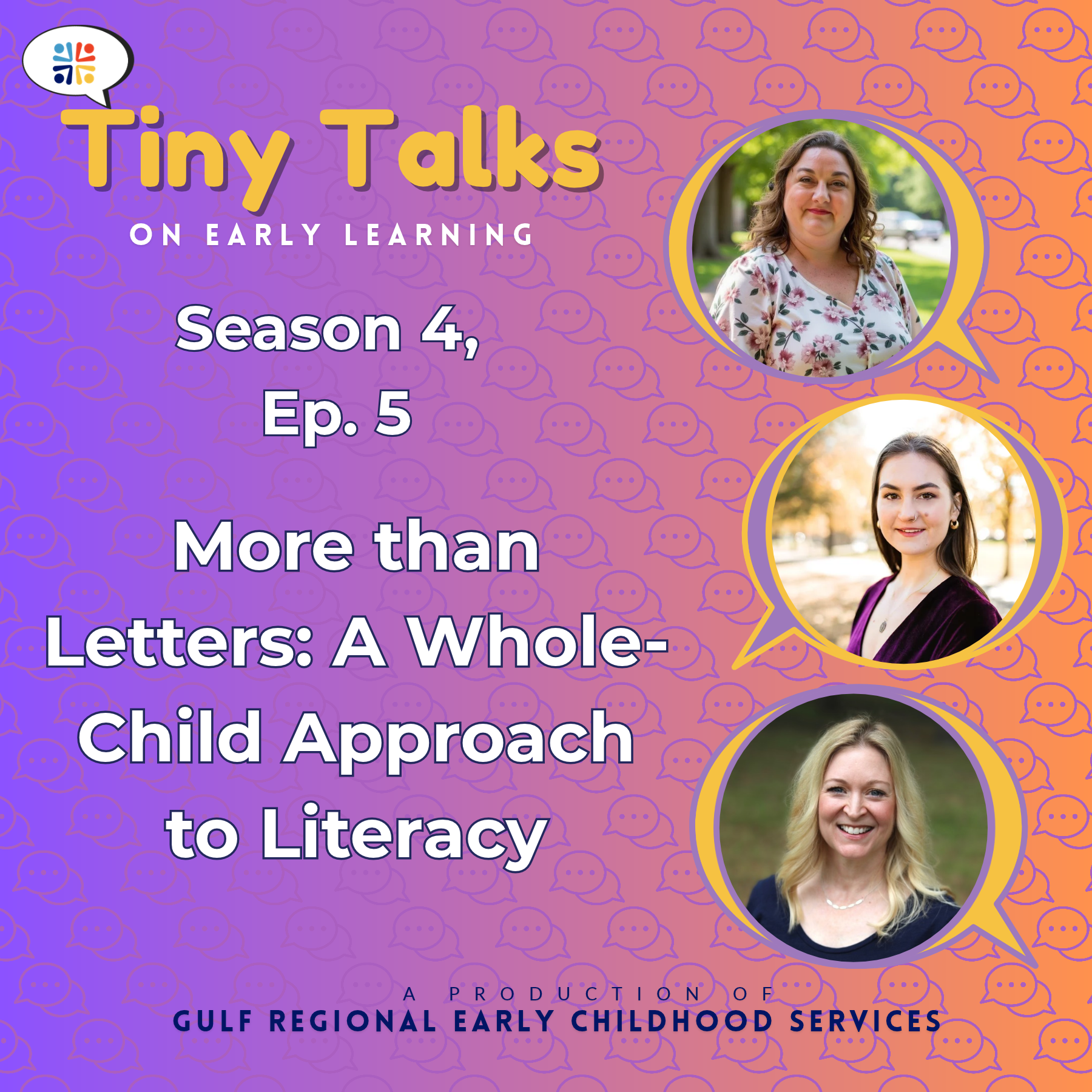
More Than Letters: A Whole-Child Approach to Literacy
Season 4, Episode 5
Download the episode transcript here.
Episode Description:
Early literacy is about much more than recognizing letters, practicing sounds, or learning to hold a pencil. Before children can become confident readers and writers, they need opportunities to move, talk, play, explore, build relationships, and make meaningful connections to the world around them.
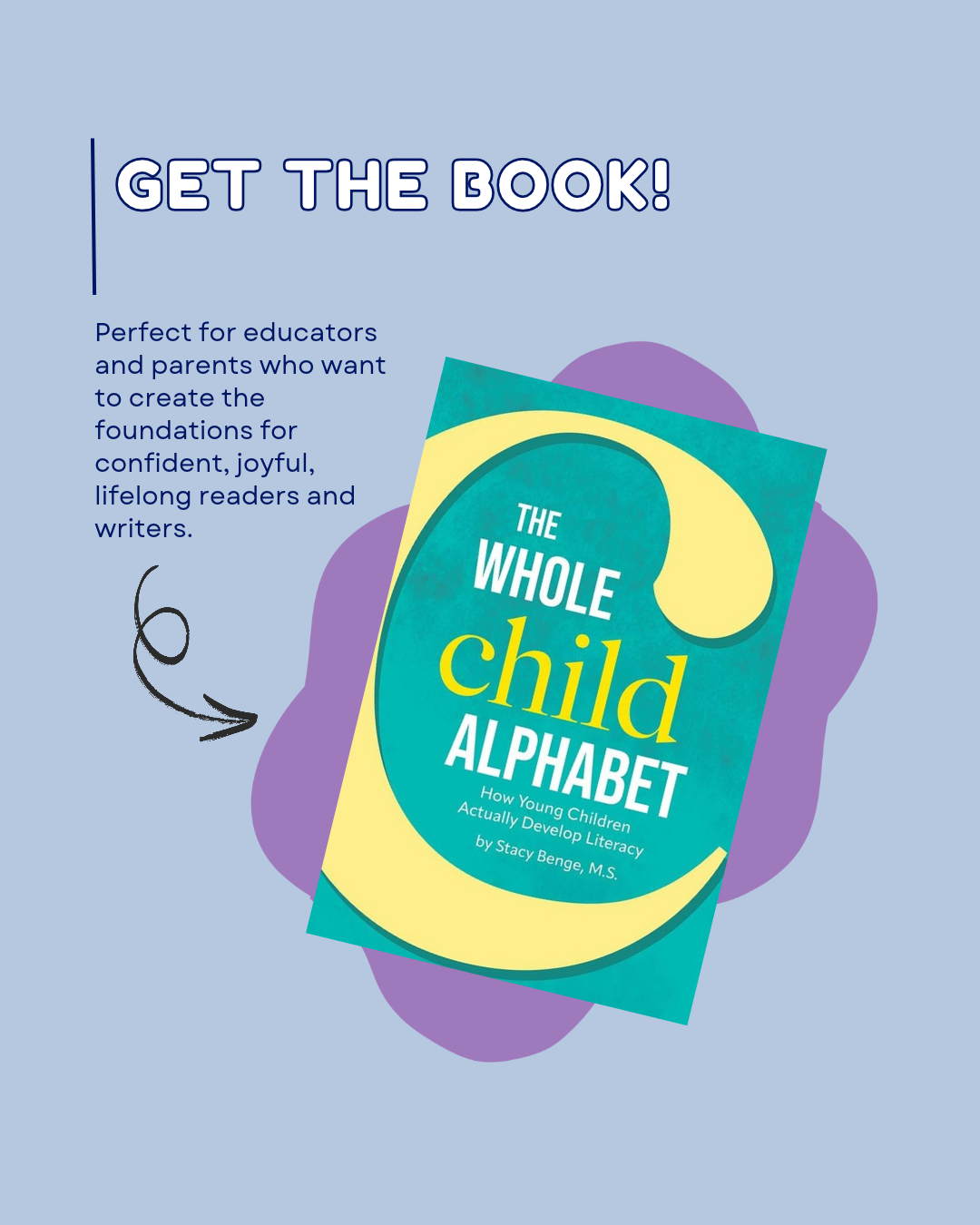
In this episode, Jessica and Venay welcome early childhood author and speaker Stacy Benge, author of The Whole Child Alphabet: How Young Children Actually Develop Literacy. Stacy explains how physical, cognitive, language, and social-emotional development all contribute to literacy—and why concentrating too heavily on early academic instruction can cause us to overlook the foundations children need first.
The conversation explores surprising connections between movement and literacy, including the roles of balance, core stability, crossing the body’s midline, and developing hand strength and coordination. Stacy also distinguishes between playful adult-directed activities and true child-led play, where children decide what, how, and how long they will play.
Together, they discuss creating classroom environments that protect uninterrupted play, using children’s interests to guide materials and experiences, navigating academic expectations, and helping families and decision-makers understand that play is not time away from learning. It is one of the primary ways young children learn.
What You'll Take Away:
Literacy development involves the whole child. Physical development, language, thinking, relationships, emotional security, and play all help build the foundation for later reading and writing.
Movement supports literacy in ways we may not immediately recognize. Balance, core stability, crossing the midline, visual tracking, and hand coordination can affect how children eventually read, write, and use classroom tools.
Hands-on does not automatically mean child-led. An engaging activity planned and directed by an adult can be valuable, but child-led play gives children control over what they explore, how the play develops, and how long it continues.
Children connect with print when it carries personal meaning. Their own names, the names of important people, and words connected to their experiences are often more meaningful than teaching letters in a predetermined order.
Educators can support play without directing it. Careful observation helps teachers recognize children’s interests, document learning, and introduce materials that allow their ideas to grow.
Challenge for Early Educators:
Follow their lead.
Choose one period of play this week and resist the urge to plan, redirect, or improve it.
Give children time to choose what they want to do, where the play will go, and which materials they want to use. Watch and listen closely. What language are they using? What problems are they solving? How are they moving, negotiating, imagining, or making meaning?
Write down three examples of literacy development you noticed—even if no books, pencils, or alphabet materials appeared.
The challenge is not to add more instruction. It is to recognize the learning already happening.