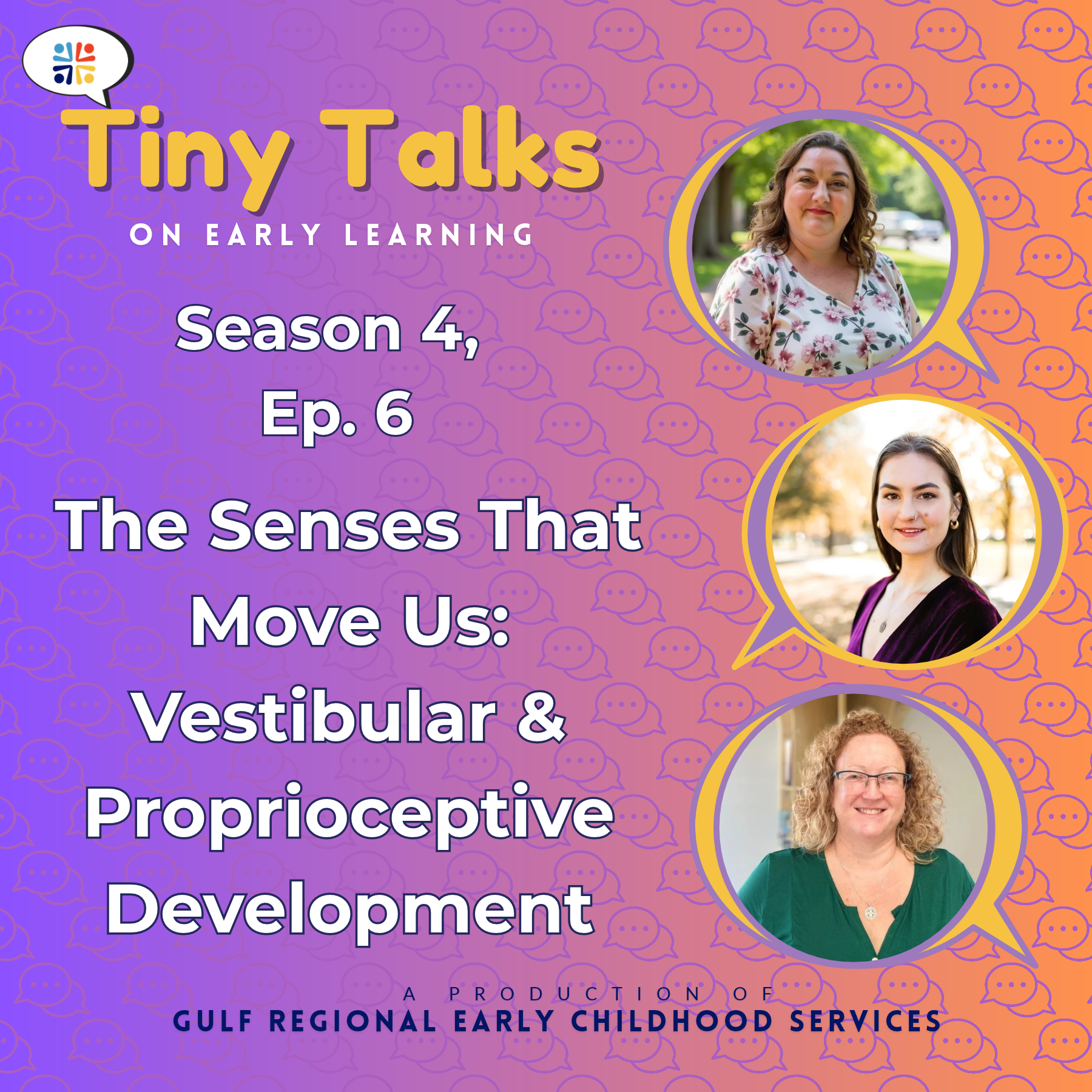
The Senses that move us: Vestibular & Propreoceptive development
Season 4, Episode 6
Download the episode transcript here.
Episode Description
Why do some children crave spinning, climbing, and jumping while others avoid those same experiences? And what does movement have to do with attention, self-regulation, and school readiness?
In this follow-up to our conversation about the eight sensory systems, Jessica and Venay welcome GRECS colleague Vicki Giles back to Tiny Talks on Early Learning for a deeper look at two often-overlooked senses: vestibular and proprioception.
Together, they explore how these systems help children develop balance, body awareness, coordination, and an understanding of movement and pressure. From sensory-seeking and sensory-avoiding behaviors to the importance of everyday physical activity, the conversation challenges educators to rethink how they support children's developing bodies.
And the best part? Supporting sensory development doesn't require expensive equipment or complicated activities. Sometimes, it's as simple as letting children carry their own backpacks, push a wagon, climb, or help clean up.
Key Takeaways for Listeners
1. Movement is foundational to development. The vestibular system supports balance, movement, and posture, while proprioception helps children understand where their bodies are in space and how much force to use. Both contribute to the skills children need for everyday activities and learning.
2. Sensory needs look different for every child. Some children actively seek movement, pressure, or physical contact, while others find those experiences uncomfortable. Recognizing these differences helps educators respond with understanding rather than assuming a child is simply being difficult.
3. Everyday responsibilities can be powerful learning opportunities. Pushing chairs, carrying materials, sweeping, pulling wagons, and manipulating playdough all provide opportunities for children to develop body awareness, coordination, and control.
4. Sensory experiences can support regulation. Movement, physical pressure, and comforting touch may help children feel more settled and connected. What works for one child—or even for the same child on a different day—may not work for another.
5. Children don't outgrow their need for movement when academics begin. Physical activity remains important as children enter school and face greater expectations for sitting, focusing, and completing tasks. Movement should remain part of the learning day, not just a reward for finishing work.
Episode Challenge: Make Room for Movement
This week, take a closer look at your classroom routines and ask yourself: Where might I be doing something for a child that they could safely do for themselves?
Choose one everyday opportunity to step back and let children take the lead. Maybe it's carrying classroom supplies, pushing a wagon, helping prepare the rest area, or moving materials from one place to another.
Notice how children respond. Who eagerly takes on the challenge? Who needs encouragement or a little extra support? What do you learn about their confidence, coordination, and sensory preferences?
Remember: Supporting sensory development doesn't always mean adding something new to your day. Sometimes, it means making more room for children to do what they're naturally driven to do—move, explore, experiment, and grow.